Showing posts with label Facebook. Show all posts

Monday, May 25, 2015

WWE vs UFC: The Missing Piece

WWE vs. UFC, some statistics....

More men watch UFC than WWE, 74.6% to 62.8%
More women watch WWE than UFC, 37.2% to 25.4%
A greater percentage of UFC's audience is Gen Y(18-29) & Gen X(30-44) than WWE, 36.5% & 37.1% to 29.1% & 35.8%
WWE's audience skews older than UFC's (a greater percentage of fans in the 45-64 & 65+ demographics than UFC)
A greater percentage of UFC's fans have attended/graduated from college or completed post-graduate work/degree
Of the 318.9 million people in the United States, 3.7% or 11.7 million are avid WWE fans compared to 5.1% or 16.3 million avid UFC fans.
According to WWE's investor's presentation on their corporate website, the largest percentage of their audience is 50+ years of age (37%) with 19% of their audience ages 2-17.

If you were going to summarize what you just read, you would draw the conclusion that UFC is a more testosterone-driven REAL SPORT that appeals primarily to YOUNG MEN. While WWE, or pro wrestling, is a COSMETIC ATHLETIC DRAMA that appeals to a MORE DIVERSE AUDIENCE.

The personalities and reputations of the people involved are dramatically different. UFC is made of up of ATHLETES. There are very few athletes who do or say anything controversial while carrying out their athletic endeavors. Even the more brash, demonstrative talkers like Chael Sonnen or Conor McGregor don't do much more than puff out their chests like boys in a high school hallway fight when it comes right down to it.

The only controversy that surrounds UFC are the things that take place outside of the performance arena: the PED scandals and Jon Jones' recent legal troubles as examples. Other than that, it's very easy to embrace an ATHLETE because when it comes time to market and promote a UFC event, you know what you're getting: a well-produced, sporting event in which athletes behave themselves by getting in the cage and fighting. It's the final scene of any beloved sports movie: legitimate athletes making the necessary sacrifices in order to achieve their goals. And many of these men and women are Olympians, All-Americans, or national heroes. People who are easy for the public to embrace.

In this way, UFC has virtually erased its auspicious beginnings when it was seen as barbaric and a bloodsport. It has polished its star to the point where it has become something that the public has not only accepted, but embraced.

By contrast, WWE is made up of PERFORMERS. There's a reason more pro wrestlers try ACTING than PROFESSIONAL SPORTS. When a UFC live event starts, you know what to expect: all of the talking is over, and the athletes are going to shut their mouths and compete. In a live WWE event however, you have NO IDEA what to expect. How many shows air live on TV? Not very many. And those that do typically do not have a very long run time and usually follow a very structured format. And almost never do the people responsible for the content of the show become part of the show. WWE Raw is a loosely-formatted three-hour live show that is never rehearsed and the people responsible for the content of the show are regularly part of the show. Do you see the difference?

Any live show is going to be inherently more risky for advertisers than a scripted show. But the risk involved with a WWE live product has to be considered greater by virtue of the nature of the product itself. One of the selling points of UFC is human interest. Fans are encouraged to get to know the athletes, view their story, and connect with them on social media. There are few boundaries when it comes to fan access in UFC. WWE, and wrestling in general, is still a business that is shrouded in mystery. Because the wrestlers are PLAYING A ROLE, there are often aspects of the performers' lives that THEY PURPOSELY DON'T WANT YOU TO KNOW ABOUT and will do their best NOT TO MENTION or even TRY TO COVER UP.

Pro wrestling, like UFC, has very auspicious roots. But whereas UFC has been able to shed its early less-favorable reputation, wrestling still maintains that cloud of suspicion that has hung over it since its creation. Pro wrestling has always fought the battle for legitimacy: whether it was trying to pass itself off as a legitimate sport in its early days, or trying to pass itself off as a legitimate big player in entertainment today. And the struggle is centered around the very nature of the business itself. Pro wrestling is and always has been A WORK. Wrestlers are carnival workers trying to get you to spend a dollar on the sideshow exhibit. They're trying to SELL the audience on an ILLUSION. It should go without saying that the UFC is completely different. A UFC fighter can endear himself to his audience by simply BEING HIMSELF. In most cases, a pro wrestler is trying to endear himself to his audience by being SOMEONE ELSE. This very fact alone immediately creates obstacles to fan interaction and therefore, fan investment. WWE is not going to put together a video package on Bray Wyatt's journey to the “big time” and encourage its fans to get to know him. Because that doesn't help to SELL THE ILLUSION. It actually achieves the OPPOSITE. Windham Lawrence Rotunda (Bray Wyatt's real name) might have a very compelling personal story that fans might really enjoy, but the nature of pro wrestling is in direct opposition to WWE sharing that story with its fans.

In this way, pro wrestling finds itself in a unique situation in entertainment. For whatever reason, fans of Breaking Bad can interact with Bryan Cranston at a live event or on social media, and are completely accepting of the fact that they are not interacting with Walter White, Cranston's character on the show. However, fans are less tolerant of the same type of interaction with pro wrestlers. The reason can only be wrestling's insistence on and success at SELLING THE ILLUSION that fans are so much more invested in these characters. For instance, fans are reminded every week when they watch Game of Thrones that they are watching Emilia Clarke PLAYING THE CHARACTER of Daenerys Targaryen. WWE has NEVER told its audience Dolph Ziggler's real name. But if every week during Raw's opening sequence fans read “Starring Nick Nemeth as Dolph Ziggler” this perception might change. While something so simple could help improve fan interaction, would it also SPOIL THE ILLUSION? It doesn't seem to affect the popularity of these other shows. And if pro wrestling is really just another form of entertainment, why not simply follow suit?

It almost seems silly that a million-dollar company like WWE would be failing at expanding its portfolio for no reason other than a misguided determination to hang onto its archaic carny methods of doing business, but right now wrestling seems truly STUCK. While WWE has succeeded in polishing its product to the point of having overdone it, pro wrestling remains a sort of bastard in the entertainment industry. It's not likely that they will try to appeal to the coveted 18-34 year-old demographic by reverting to more risque storylines like they did in the 90s. But if the goal is to be accepted and be invited to sit at the “big kids' table” SOMETHING needs to change. WWE has often set the trends for the wrestling business and for a company so willing to drop certain traditions in the past, it seems odd that it would be one of those very traditions that has them so hung up. It's time to pull the curtain all the way back so to speak, and finally become an open book for the welfare of the entire industry. Right now, they're on the fence and the impression is that they're scared to abandon their “secret society” mentality. But hiding in the shadows has not helped them to achieve their goals. The performers deserve to be recognized as stars and not just nameless, faceless acts in ring leaderVince McMahon's circus. A new level of respectability needs to be achieved not only in the way wrestling presents its product, but in the way it does business with not just the public, but with its performers as well.

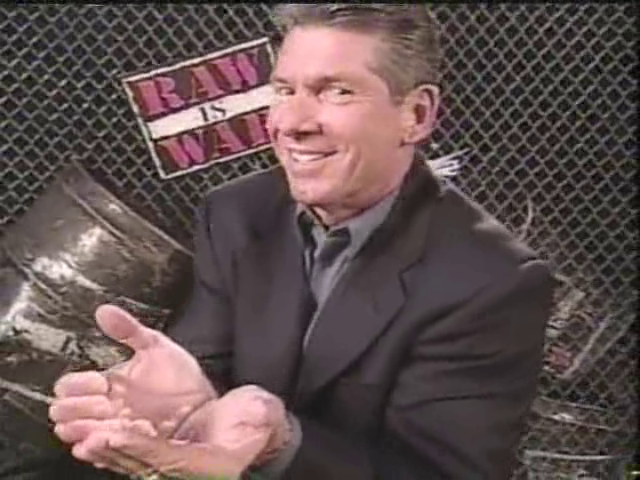
Perhaps that is what truly has Vince McMahon afraid. Right now he still wields the power of Oz. But to acknowledge that World Wrestling Entertainment is not merely his genius operation but also the result of the hard work and talent of dozens of highly trained professionals, he's reduced to merely a clever “wizard” with no true magic. Why would a man whose only goal in business has ever been success purposely prevent himself from it? The adage rings true: the only time a man doesn't want money, is when he wants something else. Wrestling fans all wondered why Vince didn't capitalize on the money that could have been made from the WCW Invasion angle or from the resurrection of ECW. Why indeed? It's not hard to piece together the truth and realize that Vince McMahon was after something else: the complete and utter burial of the two brands that dared to challenge him. Even at the expense of making himself more money. If that was true then, is it really a stretch to think that Vince McMahon, who has always had the final say and ultimate control over his product, might purposely be preventing the ONE THING that could help him to achieve his goal of mainstream acceptance of “sports entertainment” for no reason other than it would result in too much leverage for the performers not just in his company, but throughout the professional wrestling industry? Again, its not hard to piece to together.

Handsome Dan Lopez is the host of Handsome Dan's Final Say which you can listen to at wlwstudios.com. Follow him on Twitter @DansLastWord.

Wednesday, March 25, 2015

PULL UP A CHAIR

This post was inspired by a rather gruesome picture circulating on the internet of a "wrestler" with a replica of the Grand Canyon on top of his head thanks to a chair shot he received during a "wrestling match." In case you haven't seen it, here's a link to the Ring Wars Wrestling Facebook page where you can view it BUT BE WARNED, THE PHOTO IS NOT FOR THE FAINT OF HEART! It makes me a little nauseous and I'm a wrestling fan of thirty years who has seen a lot.

Anyhow, I figured this was as good a time as any to once again express my disdain for everything that is ECW and hardcore wrestling. I mention ECW specifically because it's the organization that really popularized hardcore wrestling in the United States. Sure, it was around for a long time before ECW was even conceived, in places like Puerto Rico and Memphis, but Extreme Championship Wrestling really took hardcore & high-spot wrestling "mainstream." And professional wrestling has never recovered.

Remember Chris Nowinski? Me neither. Truth is, I wasn't watching wrestling when he started making a push in the WWF in 2002 and 2003. He retired from wrestling at the age of 24 after suffering symptoms of post-concussion syndrome for over a year. After that he devoted himself to raising awareness about the dangers of concussions in contact sports, primarily football, but in wrestling as well.

My question is, since when do wrestlers get concussions? I realize there is a lot of high-impact involved in pro wrestling, especially these days, but when I was growing up, you never heard talk of concussions in wrestling. I'm sure it probably happened, but even when you read biographies of wrestlers who worked in that era or prior, you don't see it mentioned much from them either.

Sure, there was plenty of bloodletting from guys cutting themselves. You read about shoulder, arm, knee, leg, hip, back, and neck injuries. But talk about concussions is sparse. It isn't until the 90's when you start hearing that word become commonplace in discussions about injuries sustained in the ring.

Coincidentally, that's when "raising the bar" became the trendy thing to do. If Twitter had been around then, you probably would've had good ol' JR telling you to use #raisethebar during an episode of Monday Night Raw. But who spearheaded this revolution in which taking unprotected chair shots and integrating more kicks to the head and more high-impact moves that made it harder to protect yourself and your opponent the norm in professional wrestling?


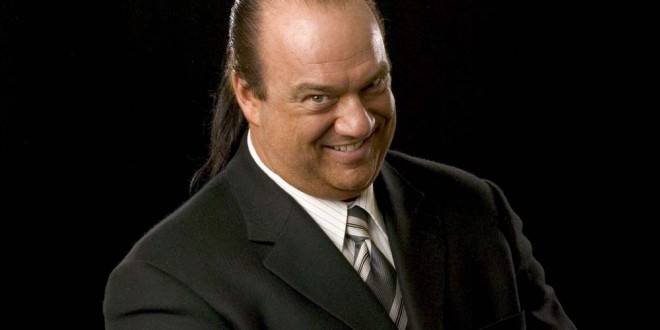
That would be this guy.

I actually think it's hard to say that Paul Heyman is solely responsible. After all, the wrestlers who worked for him were all grown men (with the exception of Mass Transit that is) who chose to participate in this much more dangerous form of entertainment. And the fans certainly have to hold some accountability themselves as well, for relishing in these types of performances. And if it had stopped with them, then I would have a lot less to say about this subject.

The problem is it didn't stop with ECW. ECW closed its doors for good in April 2001. Fourteen years ago(WWE's revival of the brand doesn't count). And yet to this day there are still independent promotions that are trying to build off of that legacy. Wrestlers on every level are dropping like flies due to injury from moves that entered the mainstream of professional wrestling in that damn bingo hall in Philadelphia. Granted, the style of wrestling seen today was going to eventually become the norm anyway thanks to the "hybrid" style that wrestlers developed from working in several different places like Canada, Mexico, Europe, and Japan.

But for all of this flash and all of this risk, what's the true reward? What type of legacy are men like Daniel Bryan really building for themselves? Or how about Sami Zayn or Adrian Neville? Fans today still have great regard for legends of the past like Hulk Hogan, Randy "Macho Man" Savage, The Ultimate Warrior, and Jake "The Snake" Roberts. Did anyone of them take unprotected chair shots? Did any of them dive through the ropes to the arena floor? Will the people who are taking such risks today, either in WWE or for an independent promotion, be remembered in the same way as these legends? If it wasn't the risks they were taking, what was it about these performers that we all remember so fondly?

It was the way they captivated our hearts and our imaginations without resorting to such cheap tricks. I realize they all had their vices, but frankly any idiot can take a chair shot. In fact, if a bunch of out-of-shape hillbillies want to beat the shit out of each other strictly for the amusement of other out-of-shape hillbillies I say more power to them. Next time do the universe a favor and put a little more Oomph! behind that chair shot and finish the job!

But for those who truly have the talent and ability to perform and entertain, I regret that risk will always be part of the job. Thankfully, World Wrestling Entertainment has cracked down on the level of violence it allows. It just isn't necessary in order to tell a story in the ring. Now if only all wrestling promotions, WWE included, can be convinced that it's not so much WHAT takes place during their shows, but WHY. Then perhaps we can enjoy watching our favorites perform a little longer and in ways that will stick with us, not for the random sort of chaos and activity that causes a car wreck to stick with you, but for the sort of creativity, nuance, and ability to tap into the human emotion that cause our favorite stories to forever be etched in our subconscious minds, and bring a smile to our face when we recall them consciously.

Think about those moments that you will never forget and what made them so memorable. Certainly the action is tied to those memories. After all, it's professional wrestling. But I dare say the reason you hold onto those memories goes deeper than that. And that's the greatness of professional wrestling that I'm afraid too often is being substituted for with high spots. And there's not a promotion on ANY level that isn't guilty of this!

So rather than pulling up a chair to split another man's skull with, how about you take a seat and watch the pros of the past do more with glance than you could with a 450 splash?

I'm Handsome Dan, and you just read the last word.

["Handsome" Dan Lopez is a regular contributor to Ring Wars Facebook Page. Follow him on Twitter, @DansLastWord]

Saturday, January 11, 2014

Handsome Dan's Final Say


Yes, I realize it's been a while. When I saw that my last post was from back in July of 2013 I couldn't believe it myself.

But the Handsome One is back and he's STILL the Smartest Man Not In Professional Wrestling! [trademark, muthaphuckas!] Want proof? Just click on the link below and listen to me ramble in a drowsy stupor on the long ride home New Year's Eve and marvel how that even at half-speed, my brain is still calculating faster than 90% of the backwards cap wearing masses.

But don't just stop there. Further your education by reading some of the articles here as well, and while they may not make you as smart as me, you might just be able to impress your friends with the wisdom you glean.

So without further ado, I give you...Handsome Dan's Final Say!

5e3bd62f6477c47727ed2519da99b01d0f7456c54dd9a12d34

Friday, January 25, 2013

All The Rage

If you're a regular reader, you know I have a tendency to defend World Wrestling Entertainment's methods as reasonable based on the fact that they are in the BUSINESS of MAKING MONEY through ENTERTAINMENT.


However, I want to make it clear that while I understand why WWE does things the way they do, I believer that there are indeed BETTER WAYS to accomplish the same goal of MAKING MONEY.

That paragraph is going to be the most important one in this entire post so if you're going to get halfway through this and forget what I just said, you might as well stop reading now. It is important that you understand that I am not simply a MARK who thinks WWE should book their product based on whatever I or anyone else thinks would be "cool." I realize the goal in all of this is to MAKE MONEY. I'm not suggesting otherwise. However, what I am about to suggest is that perhaps actually booking what fans like myself think would be "cool" might just be the BEST way to do that.

Clearly, WWE is trying to find their next "Next Big Thing." You can't say they haven't turned over their share of rocks looking for it. They're tweeting and touting and tubing right along with the rest of society. They're making movies and having movie stars as guest hosts. They're even giving one a title shot! They're boasting more original programming on tv now than they ever have before.

And yet, you listen to the people who used to come out in droves to sit and cheer as teens and young adults during the "Attitude Era" or stayed up late to watch Saturday Night's Main Event as kids, people like myself, and the consensus seems to be, the mainstream product has lost its appeal.

I'm not saying the current product doesn't still have an audience. There are over four million people watching Raw every week. Four million. And here I have the audacity to suggest that they could do better??

You betcha.


WWE has always had this audience. These are the lemmings who are simply out to have a good time at the Vince McMahon's dog and pony show. If that's you, no offense but you're probably not reading this anyway. But these are the rank-and-file members of the "WWE Universe" who are essentially marks that root for the "good guys" and boo the "bad guys." If you've ever had a conversation with one of these people you know exactly what I'm talking about.


Not that they don't have their place in society. The product needs people like them because they're always going to be there no matter what. I think the closest WWE ever got to alienating this particular type of fan was during the aforementioned "Attitude Era" when the raunch factor really got turned up and families with young kids began to turn away.


I believe that was bad business then and I believe it's bad business now. Wrestling doesn't need to be raunchy to be good. Not that it can't be. The occasional character who swears and flips people off, when done at the right time and for the right reason, can become a real money maker (i.e. "Stone Cold" Steve Austin). But that doesn't need to be, nor should it be, the norm.

So what should be the norm on a professional wrestling show? Brace yourselves. How about wrestling?


For all the tv time WWE is currently filling, there's an awful lot of filler and not nearly as much wrestling as there could be.


Before you try and come at me with statistics that suggest most of the actual show time is wrestling, understand that such statistics can be misleading, especially when you realize that the average match time is about five minutes (see PWInsider's "By The Numbers").

Now that we've gotten all the potential arguments out of the way, let's look at how I believe WWE could improve their bottom line by answering three simple questions: WHY, WHEN, and WHO?


WHY should WWE make wrestling more of a focal point?

In a recent Facebook conversation I had, someone made a point that WWE's most prosperous eras were defined by the appetites of their audience. During the Hulkamania days, larger-than-life action heroes like Schwarzenegger, Stallone, and Van Damme were the rage. Then, in the Attitude Era, society in general had developed its own attitude and tv had become edgier across the board. Whether by accident, or by having their finger on the pulse, WWE was able to capitalize on these societal trends.

A "trend" of similar lucrativeness has yet to be identified in today's society. For all the widespread influence of social media, an effective way to make money with things like Facebook and Twitter, has yet to be found.


But there is a less obvious trend developing in the world of independent wrestling. The indys are making a quiet but steady resurgence with groups like Beyond Wrestling making an impact via YouTube, and Pro Wrestling Syndicate using Twitter and stacked lineups for their regular house shows featuring a touch of nostalgia with names of the past as well as thrilling action provided by a fresh crop of young talent. Longer-tenured groups like Ring of Honor, CHIKARA, Dragon Gate USA and Evolve, Combat Zone Wrestling, and East Coast Wrestling Association are still going strong. And upstarts paying homage to the glory days of Extreme Championship Wrestling, Shane Douglas' Extreme Reunion and Tommy Dreamer's House of Hardcore have quickly garnered a significant following.


The point is, despite what seems like an oversaturation of independent wrestling promotions, interest in hasn't waned. It has in fact, grown. Which can only mean one thing: people want to watch wrestling, and are willing to pay money to do so.

That's why WWE exists, isn't it? Is the goal not to make money? Does the second "W" not still stand for Wrestling?

The fact is, fans of professional wrestling, even those who have given up on the current mainstream product, still consider WWE to be the premier wrestling company. They would love to go to WWE for their fix, but they know they're more likely to walk away frustrated rather than fulfilled because of how little actual wrestling they're going to be fed.

So they choose to do something else with their time rather than tune in when WWE is on television. They chose to stay home when a WWE house show comes to town. They're not opening their wallets when WWE is on pay-per-view.

But these same people, these WRESTLING FANS, are spending money on DVDs, tickets, even merchandise, for often more than one of the independent wrestling promotions I've listed above.

That's money WWE isn't making. Seems to me, someone has lost sight of the goal. It's not like I'm asking a movie studio to go after those dollars. Or a ballet troupe. I'm talking about a fucking wrestling company providing what wrestling fans are ALREADY PAYING FOR!

And that is WHY WWE can improve their bottom line by making wrestling more of a focal point. Next question.


WHEN should WWE make wrestling more of a focal point?


How about during their eight and half hours of programming they're running every week? Not that wrestling isn't taking place on these shows (and I'll admit, not so much a problem on Main Event and NXT from what I understand; I'll confess, I rarely watch those shows because I just ain't got that kind of time. WWE better count themselves lucky if they get three hours out of me for Raw!). It's just the quality of wrestling that they're offering.

Even the most jaded fan will have to admit that the action, when it's there, is as good, if not better, than it's ever been. Athletes today, not hindered by a lack of athleticism as well as steroid and drug abuse, are able to perform at a significantly higher level than our heroes of the past.


But when the booking is illogical, or just plain stupid, it cancels out the athleticism that we fans might normally marvel at. Blame Super Cena kicking out of everything short of a ground zero nuclear detonation, and one and a half minute matches featuring "champions" for the current disdain among wrestling fans for WWE's in-ring "action."


So rather than try to cram seven matches onto an hour and half show (Raw's approximate running time minus commercials) to the point that five of them end up timing out at five minutes or less, how about instead, give us three or four matches that are booked logically and given enough time to tell a complete story. I realize this isn't true of every fan, but there are still plenty of paying customers out there who are still willing, yay eager, to sit through an intelligently-crafted wrestling match, appreciate it, applaud it, and fork out money to see it again.

And that is WHEN WWE should make wrestling more of a focal point. Final question.


WHO should WWE use to make wrestling more of a focal point?

How about the talented individuals ALREADY ON THE ROSTER?


Since the same people are being used in every main event on every fucking show, the rest of the roster is forced to accept whatever crumbs are left over. These crumbs manifest themselves in the form of those detestable one and a half minute matches mentioned earlier.

The extent of what someone like Daniel Bryan can do inside a wrestling ring, cannot be expressed in one and a half minutes. With the exception of Khali and Hornswoggle, who no one wants to see anyway, there isn't a Superstar on WWE's roster than can exhaust their repertoire in one and a half minutes.

So since we're now cutting down on the number of matches per show, how about we also cut down on the number of appearances by the same people per show, per week?

Here's how it SHOULD work: if I've seen Damien Sandow on Raw that week, I shouldn't see him on Main Event that week. Nor should I see him on Superstars, Smackdown, or Slam. I shouldn't even see him on NXT.

Why? Because when I do, that means I'm most likely going to see him winning and losing matches arbitrarily, and I'm going to start not caring about Damien Sandow.


*******Break out your calculators, boys and girls, because it's time for Fun With Numbers! YAY!!!******

There are currently 64 male wrestlers and 10 female wrestlers who are part of WWE's regular roster. If WWE's weekly programming (all of it; not just Raw and Smackdown) were to feature nothing but in-ring wrestling and each match was to average approximately ten minutes bell-to-bell not including intros, that would amount to approximately 25 matches per week. If those were all singles matches, even using different wrestlers in every match, that would still leave over a dozen members of the regular roster without a match for that week.


The point is, there are more than enough bodies to put in the ring. PUT THEM IN THE FUCKING RING!!! Cycling through the talent would keep appearances by the top talent to a minimum, saving their bodies some wear and tear, and making the times that they do appear more significant. And it would also give the midcard and lower-level guys much needed exposure and experience. "Mini-feuds" between lower-level wrestlers have traditionally always been a great way to build a following for those performers.

Say WWE considers CM Punk, John Cena, The Rock, Sheamus, Randy Orton, Big Show, Alberto Del Rio, and Ryback their main eventers. Fine, feature them in the main events of the weekly shows but only once per week. So in other words, if the main event of Raw is John Cena vs. ADR, the main event of Smackdown can't be a tag match featuring ADR or John Cena.


Instead, how about someone like R-Truth working a midcard program with 3MB? Or the tag team of Santino and Zack Ryder (back when they were still a thing) working a program with Rhodes Scholars? Wrestling fans remember good matches. Put those four guys in the ring and give them some time and fans are going to be talking about the match. Fans talking creates buzz, and buzz results in more people tuning in, which results in more people ordering pay-per-views, buying tickets, buying merch, etc., etc., and yeah I know, I'm sick of me always being right too!

And THAT, my friends, is WHO WWE should use to make wrestling the focal point.

So while WWE is wasting their time trying to answer the question of "What's the next big thing that's going to be all the rage?" I've answered the much more important questions. The questions that matter.

WWE need look no further than the wrestling fans to find "all the rage." But the "rage" is in their hearts, built up over years of frustration with the mainstream product. If WWE will just take the time to look, they won't find some hot new social trend. What they'll find is the same thing that's been there all along. The same thing that has worked before and will always work. Satisfy the WHY, WHEN, and WHO that the people want. The people want WRESTLING.


And whether World Wrestling Entertainment likes it or not, THAT is the Last Word. Until next time, ya freaks.............DISCUSS!

[Our intrepid author, "Handsome" Dan Lopez, is mentioned regularly on his two favorite wrestling shows, The Shining Wizards Wrestling Podcast, and Turnbuckle Throwbacks. Follow him on Twitter, @DansLastWord.]